High-Performance Transformer Bushing for Industrial & Commercial Use
Transformer bushing is a key insulation device outside the transformer tank, which plays a core role in insulation isolation, mechanical fixation, and conductive connection. It leads the winding lead out to the outside of the oil tank and also bears long-term load current and short-circuit impact. It is one of the components with the highest fault rate of transformers (accounting for about 20% -30% of faults).
The following is a systematic compilation of information from the aspects of defining functions, structural classification, technical parameters, common faults, and operation and maintenance standards.
1、 Basic definition and core functions
1. Definition
Transformer bushing is the core component that allows conductors to pass through the transformer box, achieving insulation between live conductors and grounded casings, mechanical support fixation, and electrical connection and conduction.
2. Three core functions
Insulation function: Ensure electrical insulation between lead wires and between lead wires and transformer casing (grounding), withstand system voltage and overvoltage.
Conductive function: It can withstand short-term high current (up to 20-30 times the rated value) when passing through the rated load current for a long time and short circuit.
Mechanical and sealing functions: fixed lead wires, capable of withstanding lead tension, wind force, and seismic force; Seal the insulation oil inside the transformer to prevent leakage, moisture and dust.
3. Basic design requirements
Meet the specified electrical and mechanical strength, and withstand vibration and impact.
Good thermal stability, able to withstand instantaneous overheating during short circuits.
Compact structure, light weight, reliable sealing, strong universality, and easy maintenance.
2、 Main types and structural characteristics (classified by insulation structure/medium)
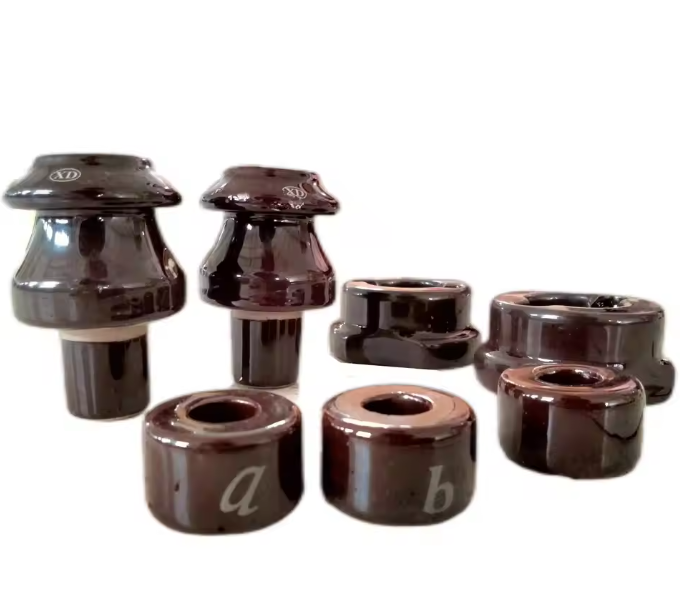
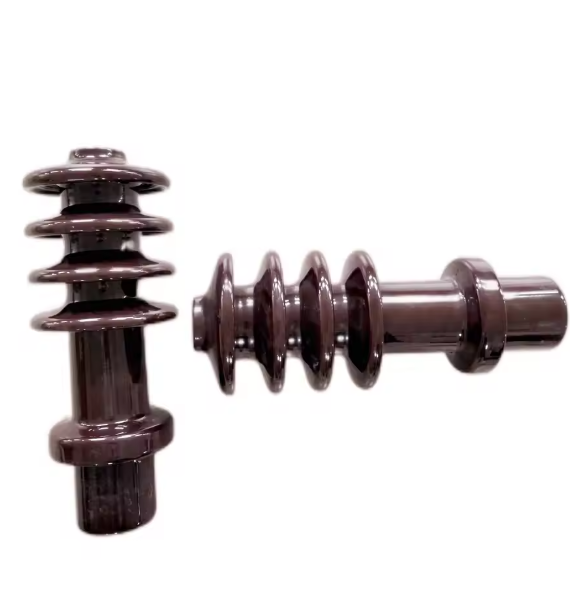
1. Pure porcelain bushing (single insulation, 10kV and below)
Structure: Electrical ceramic outer insulation+internal air/solid ceramic, with a conductive copper rod passing through the center.
Pure porcelain bushing
Advantages: Simple structure, low cost, high mechanical strength, and minimal maintenance.
Disadvantages: Limited insulation performance, prone to corona and partial discharge under high voltage.
Applicable: 10kV and below distribution transformers, indoor low-voltage scenarios.
2. Oil filled bushing (composite insulation, 35kV level)
Structure: Ceramic sleeve+internally filled with transformer oil, conductive rod wrapped in insulating paper, oil paper composite insulation.
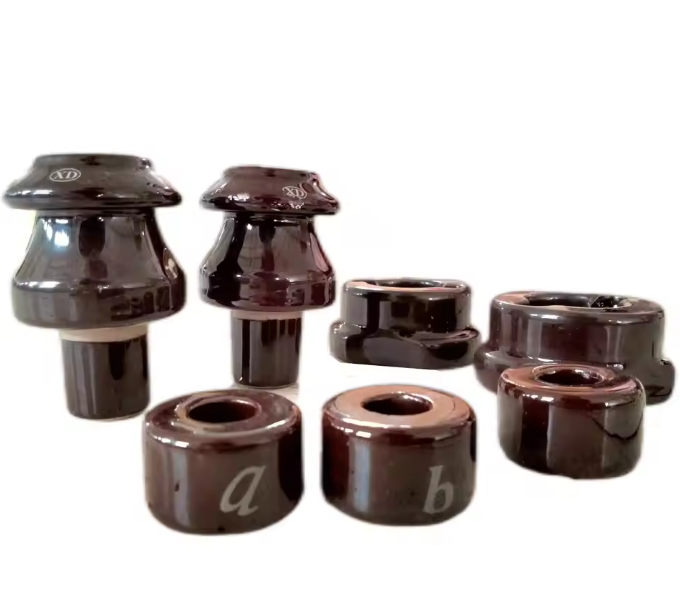
Oil filled casing
Advantages: better insulation than pure porcelain, good heat dissipation, and moderate cost.
Disadvantage: There is a risk of oil leakage, and regular inspections of oil quality and level are required.
Applicable: 35kV oil immersed transformer.
3. Capacitive bushing (high voltage/ultra-high voltage, 110kV and above)
Core structure: Oil immersed paper (OIP)/glue immersed paper (RIP) capacitor core as the main insulation, multi-layer insulation paper+aluminum foil pressure equalization electrode rolled, external ceramic sleeve/composite jacket, oil pillow, pressure equalization ball, and base.
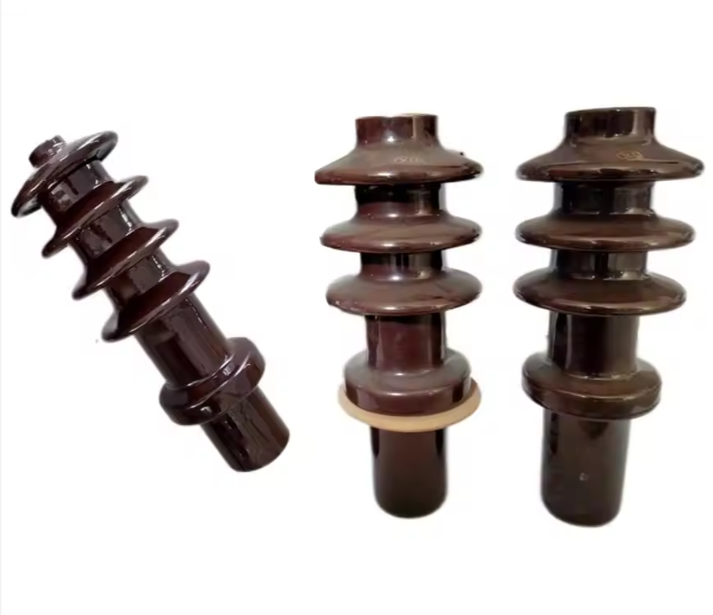
Capacitive bushing
Subcategory
Oil paper capacitive (OIP): insulation paper+transformer oil, with extremely strong insulation performance, suitable for 110kV-1000kV ultra-high/extra high voltage; Need to maintain oil level and quality.
Resin impregnated paper capacitor (RIP): resin impregnated paper solid insulation, oil-free, leak free, maintenance free, fire-resistant and explosion-proof; Suitable for 35kV-500kV, urban substations, and high environmental requirements scenarios.
Key components: oil pillow (compensating for thermal expansion and contraction), pressure equalizing ball (improving electric field), end screen (grounding/measuring), oil intake valve, and vent plug.
4. Inflatable sleeve (SF ₆, special high-pressure scenario)
Structure: Internally filled with sulfur hexafluoride (SF ₆) gas, high insulation and arc extinguishing performance.
Advantages: oil-free, environmentally friendly, explosion-proof, and basically maintenance free.
Disadvantages: High sealing requirements, high cost, and complex gas monitoring.
Applicable to GIS, ultra-high voltage, and strict fire and explosion prevention scenarios.
5. Composite insulation sleeve (new lightweight)
Structure: Silicone rubber umbrella skirt+fiberglass core rod/impregnated paper, replacing traditional porcelain sleeves.
Composite insulation sleeve
Advantages: Light weight (1/3 of ceramic sleeve), anti pollution flash, anti impact, not fragile, easy to install.
Applicable to outdoor heavily polluted areas, high altitudes, and substations with high seismic requirements
3、 Key technical parameters
1. Electrical parameters
Rated voltage (kV): The nominal voltage of the system (such as 10, 35, 110, 220, 500, 750, 1000).
Rated current (A): Long term current carrying capacity (630, 1250, 2500, 3150, 4000, 6300, 12500).
Insulation level: lightning impulse withstand voltage, operational impulse withstand voltage, 1-minute power frequency withstand voltage.
Partial discharge capacity: High voltage bushing ≤ 10pC (standard), ultra-high voltage ≤ 5pC.
Dielectric loss factor (tan δ): OIP sleeve ≤ 0.008 (20 ℃), RIP≤0.005。
2. Structure and environmental parameters
Creepage distance: outdoor ≥ 25mm/kV (level I pollution), ≥ 31mm/kV (level II), ≥ 40mm/kV (level III heavy pollution area).
Umbrella skirt form: large and small umbrellas, equal diameter umbrellas, anti icing, anti pollution flash.
Material: External insulation - ceramic/silicone rubber; Internal insulation - oil impregnated paper, adhesive impregnated paper, SF ₆; Conductor - copper/aluminum alloy.
Sealing grade: fully sealed, leak proof, moisture-proof, with a warranty period of 10-30 years.
4、 Common faults and failure modes
1. Insulation faults (highest proportion)
Dampness: Sealing failure, water ingress, increase in tan δ, decrease in insulation, breakdown.
Oil deterioration (OIP): Oil oxidation, impurities, reduced insulation, partial discharge.
Damage to capacitor core: interlayer short circuit, aging of insulation paper, breakdown.
Partial discharge exceeding the standard: uneven electric field, defects, and long-term insulation breakdown.
2. Mechanical and sealing failures
Oil leakage: aging of sealing rings, loose flanges, and cracks in ceramic sleeves.
Ceramic sleeve damage: external impact, temperature stress, earthquake.
Conductor overheating: poor contact, excessive current, loose terminals.
Equal pressure ball/end screen fault: poor grounding, discharge erosion.
3. Typical consequences of faults
Tube breakdown → Transformer tripping, winding damage, fire.
Serious oil leakage → Transformer oil shortage, insulation degradation, forced shutdown.
Long term development of partial discharge → insulation breakdown and explosion.
5、 Operation and testing standards (commonly used in the power industry)
1. Daily inspection
Appearance: No damage, no cracks, no discharge marks, no oil leakage.
Oil level (OIP): The oil level of the oil pillow is normal, without discoloration or impurities.
Temperature: The body temperature is ≤ 90 ℃, and the terminals are not overheated or discolored.
Sound: No abnormal discharge sound or vibration sound.
2. Preventive testing (cycle 1-3 years)
Insulation resistance: High voltage bushing ≥ 10000M Ω (2500V shaker).
Dielectric loss factor (tan δ): OIP ≤ 0.008, RIP ≤ 0.005, exceeding the standard indicates insulation degradation.
Partial discharge measurement: ≤ 10pC, exceeding the standard requires maintenance.
Oil chromatography analysis (OIP): detects H ₂, CH ₄, C ₂ H ₂, etc., to determine overheating/discharge.
AC withstand voltage test: 1-minute power frequency withstand voltage to verify insulation strength.
3. Replacement and scrapping standards
Breakdown, severe oil leakage, ceramic sleeve cracks tanδ>0.015、 Partial discharge>50pC, excessive acetylene in oil.
Product Inquiry
Copyright © 2025 Tianjin Helida Trading Co., Ltd., Company All rights reserved